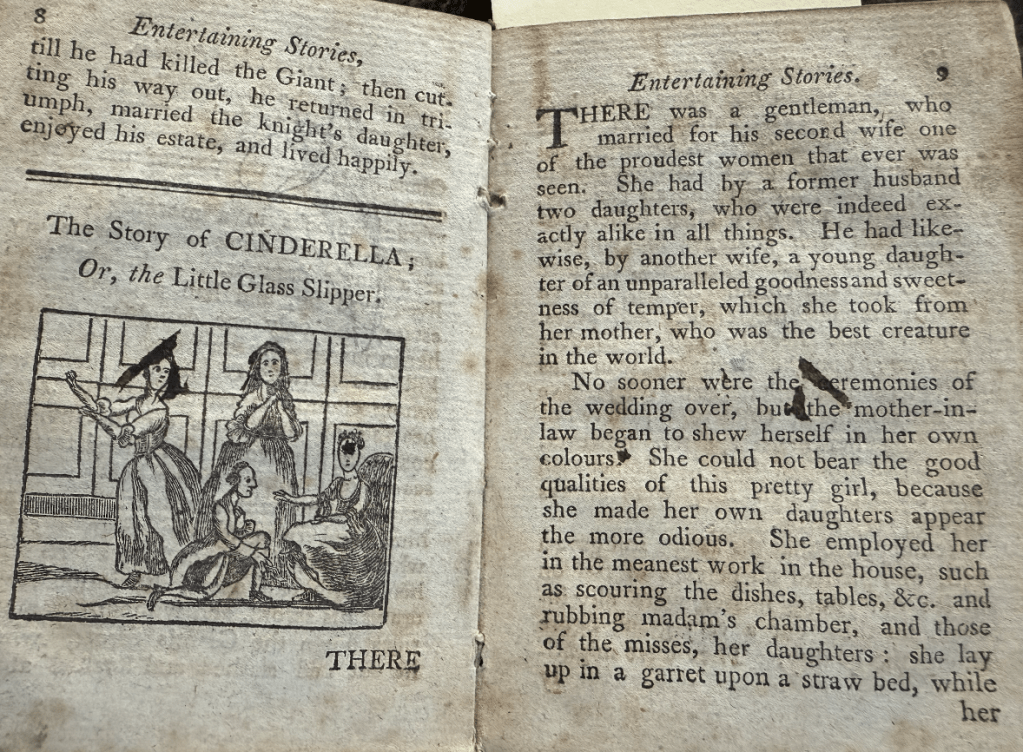
It’s a small book, just a smidge larger than my palm, and more rectangular. The cover was once maybe green, maybe brown, but has faded and molted in a way that looks almost mossy. It is bound together with twine woven up and down the spine. I’m at the Smathers Library on the University of Florida Campus, sitting in the 2nd floor reading room on the last day of my travels as the 2025 ALSC Bechtel fellow, and I’ve found another rabbit hole to go down.
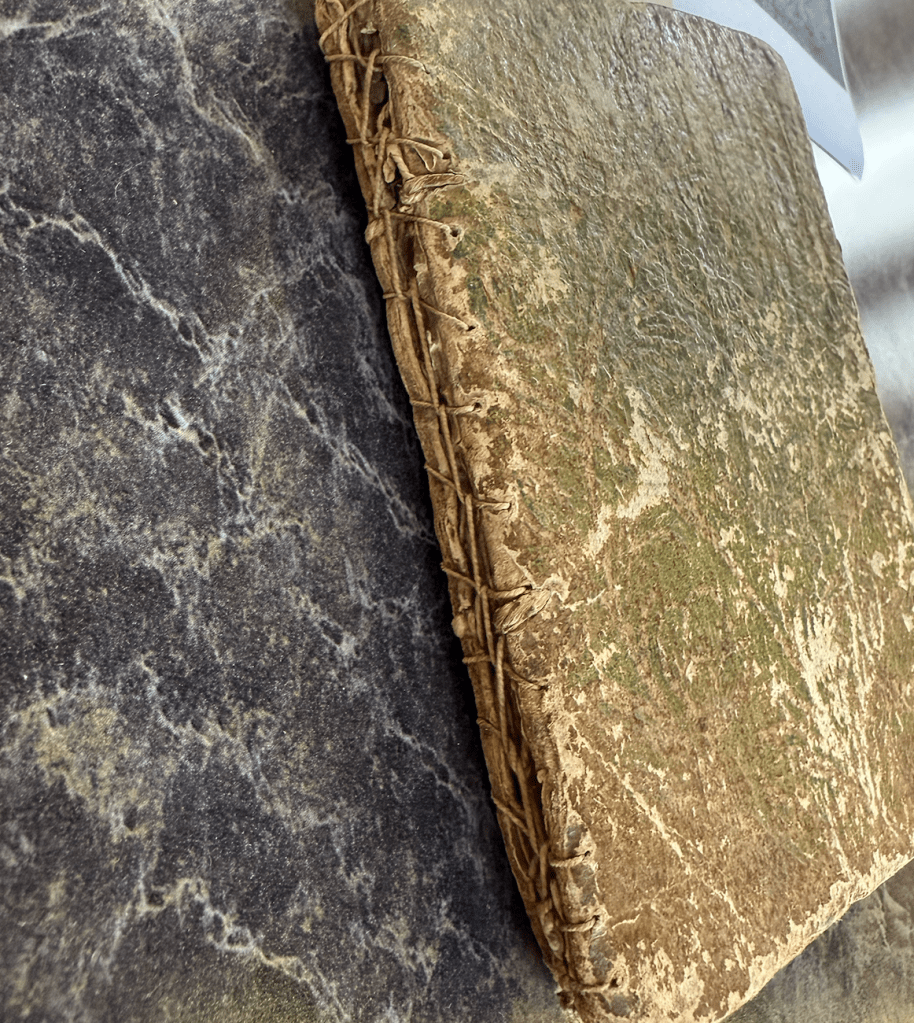
“A Collection of the Most Approved Entertaining Stories calculated for the Instruction and amusement of all the little Masters and Misses in this vast Empire” it touts on the front page. It’s by Solomon Winlove, Esq. It’s a new edition, printed for E.Newbery in London The price? Six pence.

She makes it home on time, but asks her godmother if she might go again the next day, because “the King’s son had desired her.” Around that time, her sisters return to brag about what a great night they had and how great this unnamed princess was.
The next night the sisters return to the ball, and so does Cinderella, “but dressed more magnificently than before.” When it’s time to leave, she scampers away “as nimble as a dear” and leaves behind a glass slipper, on accident. She barely makes it home–having to run because no pumpkin coach, and her finery is all gone by the time she makes it back.

A few days pass, and the forlorn king’s son (the word Prince is not used…interesting) declares he will marry whomever the glass slipper fits. This is where I lean in–are we cutting off toes in 1775 or not?
Quickly I realize, no. No toes are cut off in this 1775 Cinderella. Her sisters “did all they possibly could to thrust a foot into the slipper” but the knives do not come out.
The slipper fits, the godmother re-enters and gives Cinderella her finery again (does anyone else think this is weird? Do they ALL have godmothers?) and the sisters fall at her feet begging for forgiveness, which she in her infinite wisdom grants them. She even gets them husbands, “two great lords of the court.” Don’t we all love a happy ending?
The story ends on page 25–a rather longer story, but familiar. It’s less Grimm, but still familiar. Godmothers, glass slippers, “sisters” from a 2nd wife’s first marriage. The father is not killed off in this story, but he’s completely uninvolved. He’s not mentioned once after the first few pages, even though he is the first character introduced. The magic remains, the godmother is a FAIRY after all, and the core of the plot seems to have found it’s footing by the late 18th century.
I was, I’ll admit, expecting a bit more differences than with other Cinderella tales, especially of more recent note, but it was fascinating to see how much of this story has stayed the same for 250 years. It’s also exhilarating to hold a 250 year old book in your hands and know that while the battles of the Revolutionary War were raging on, some little child was holding this in their hand and leafing through these stories like they were familiar friends.

 www.aryssareads.com
Leave a comment